The gap between the campaign and the store floor
A campaign is approved at headquarters and finished, or not, by a few people in each store. Much of the gap between the two is designed in, which means some of it can be designed out.

A national retail campaign has two audiences, and usually only one of them gets a real brief. Customers get the concept, the spot, the art direction, the media plan. The store team gets a box, a date and a set of instructions.
What happens to the box is rarely measured. One study did measure it. Ashish Agarwal and Ioannis Stamatopoulos of Texas McCombs, with Jacob Zeng of Gonzaga University, used data from sensors built into promotional displays at a Fortune 500 brick-and-mortar chain: ten campaigns, 4,786 stores and close to 15,000 displays over six months ending in March 2018. About a third of the displays, some 5,000, were never installed. Those that were installed stayed up for 62 percent of the planned period. Only 2 percent went onto the floor and came off it on time. And it mattered: displays lifted sales of the targeted products 2.3 percent more when they were up during the campaign period.
The explanation was not laziness. Store managers described displays as a hassle to assemble and dismantle, something that takes up room in the stockroom and clutters the floor. The data backed them up. Larger, more complex displays were far less likely to reach the floor, and so were those that arrived too early or on a weekend.
Most of the failure is in the design
Read that list again and notice who controls each item. Size, complexity and delivery timing are decided at headquarters or by the agency, weeks before anyone in a store opens the box. The store gets the blame for the gap, but much of it was set upstream.
The point-of-purchase industry has said as much for years. A 2015 compliance report from POPAI UK & Ireland, drawing on 2013 studies, listed the top reasons campaigns are executed badly: vague and ambiguous instructions, display designs that do not help compliance, fragile parts that break, overly complex planograms, and nobody checking after installation. It cited research where full compliance with in-store campaigns could be as low as 29 percent in some developed markets, and found that only 21 percent of retailers independently monitored compliance while 79 percent simply assumed displays were up. The numbers are old and the source is an industry association. The list of causes has not aged at all.
The store team is the last medium
For a promotion, the gap costs sales. For a loyalty program, it costs more, because the store team is not just installing the campaign. They are explaining it.
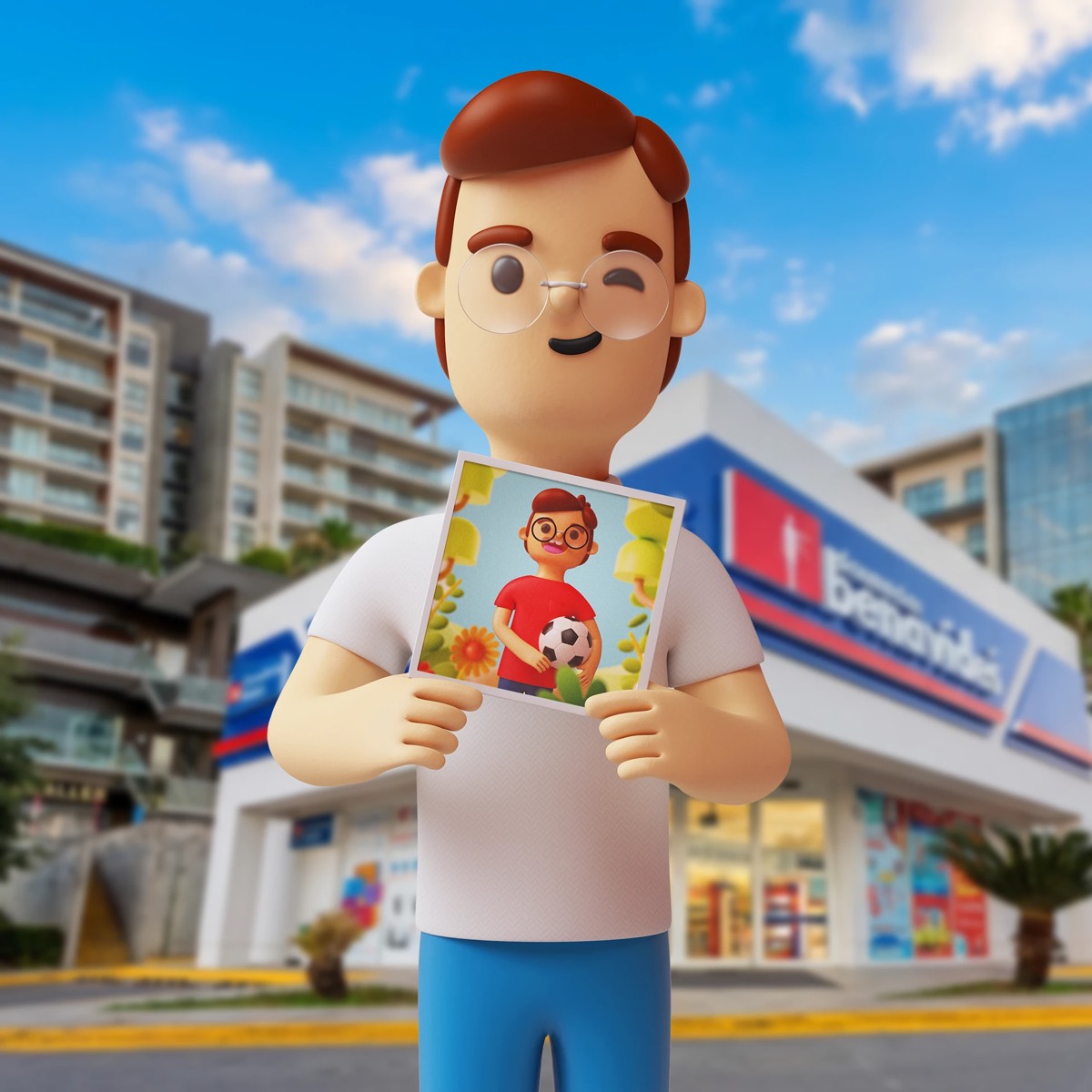
WAOF, a technology, product and creative studio that started in Monterrey, has worked with Farmacias Benavides since 2019. When the chain renewed its loyalty program as Benavides Conmigo, our work went from the first proposal to every store in eight weeks, between December 2023 and early February 2024. The program had five benefits, each with its own 3D icon: Cashback, Días de Bienestar, Productos Gratis, Promociones and Alianzas Exclusivas. The point-of-sale pieces included shelf danglers, ceiling danglers and window signs. All of that is visible to the customer. What the customer does next is ask someone at the counter what "Días de Bienestar" means, or whether the cashback applies to a prescription.
That question is where the campaign actually lands. Benavides ended 2025 with 1,149 stores and 7,150 store employees, about 6.2 people per store in the company's own figures. A national launch, in other words, is finished by a few people per location who also have a pharmacy to run. If they heard about the program from the same spot as their customers, the campaign has spent its budget on a promise the floor cannot keep.
This is why our case page describes the internal side of the Benavides work in plain terms: communication that reaches every store, "so teams on the floor know what customers are seeing." It is also the line in our thesis that we return to most in retail: agencies focus on the message, consultancies focus on the strategy, operators deal with the gaps.
Designing a campaign for the store floor
None of this needs a new discipline. It needs the store to be treated as a production constraint from the first day, not as a distribution step at the end. In practice, that means a few decisions that are easy to make early and expensive to make late.
Write the store version of the campaign at the same time as the public one. Not a summary of the creative, but the questions staff will hear and the one-sentence answers, approved by the same people who approve the spot.
Design the kit for the stockroom and the shift. How many pieces, how long to assemble, who needs a ladder. The McCombs data suggests every extra component lowers the odds of the display reaching the floor.
Time the arrival for the store, not for the warehouse. A display that lands too early waits in the back, and in the study, displays delivered on weekends were also less likely to go up.
Decide before launch how anyone will know it happened. The study's authors point to sensors or incentives. Simpler options exist, from photo confirmation to a short call with a sample of stores. What matters is that the answer is not "we assume."
We should be honest about the limit here. The public figures above come from a US chain and from UK industry research, not from our clients, and we are not publishing execution rates for any of them. What we can say is that the distance between an approved campaign and a store floor is not a communications problem or an operations problem on its own. It sits exactly between the two, which is why it so often belongs to nobody.
Questions
Why are marketing campaigns poorly executed in physical stores?
Mostly because of decisions made upstream. In a study by Texas McCombs and Gonzaga researchers covering 4,786 stores and close to 15,000 displays over six months ending in March 2018, about a third of displays were never installed. Larger, more complex displays and those delivered too early or on a weekend were less likely to reach the floor.
How can a retail chain close the gap between a campaign and in-store execution?
Treat the store as a production constraint from day one: write the store version of the campaign alongside the public one, design the kit for the stockroom and the shift, time its arrival for the store rather than the warehouse, and decide before launch how anyone will know it was executed.
How should store staff learn about a new loyalty program?
Before customers start asking. In a loyalty launch the store team does not just install the campaign, it explains it, so staff need the questions they will hear and one-sentence answers, approved by the same people who approve the spot. If they learn about the program from the same ad as their customers, the floor cannot keep the promise.
Why does internal communication from headquarters to stores matter for a campaign?
Because the store team is the last medium. In a chain like Farmacias Benavides, with 1,149 stores and about 6.2 store employees per location at the end of 2025, a national launch is finished by a few people per store who also have a pharmacy to run. Communication that reaches every store lets them know what customers are seeing.