Seven years with one client: what changes, what stays
Seven years is now roughly the average length of an agency relationship in the US. The interesting part is not how long it lasts, but what moves while it does.
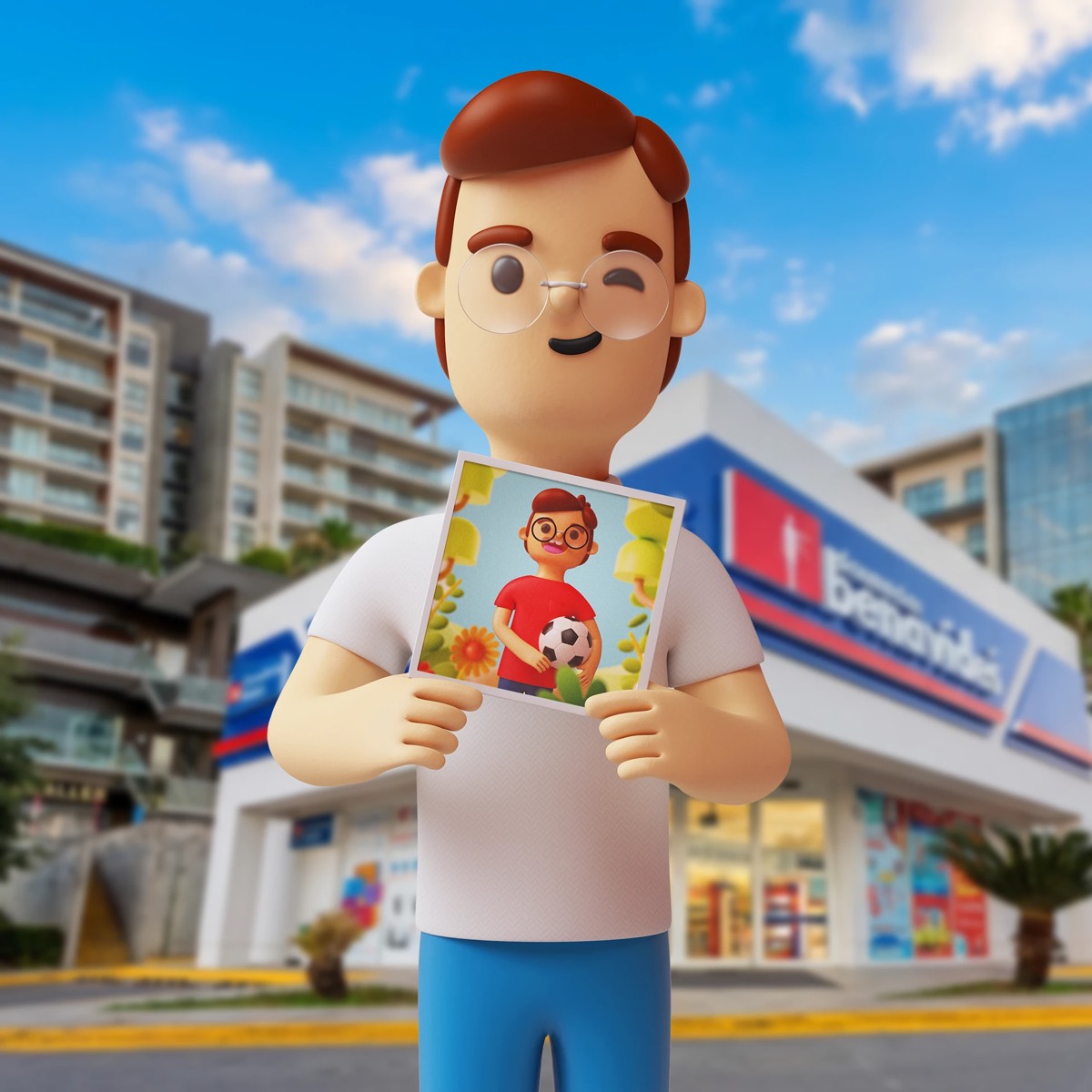
We started working with Farmacias Benavides in 2019 as its creative agency. Seven years later the work covers national campaigns, new sales channels and the communication that reaches every store. That is the summary on our case page. It is accurate, and it leaves out most of what is worth saying.
Start with the number. Seven years sounds long in an industry known for short marriages. It isn't anymore. In April 2025 the ANA and the 4As published joint research putting average client-agency tenure at about seven years, more than double the 3.2 years reported in 2016. Integrated full-service agencies averaged 7.3 years. Relationships with no mandatory reviews averaged 8.1 years; with frequent reviews, as few as 3.8. The average pitch cost the client $408,500. These are US figures, and Mexico is a different market. Still, they remove any reason to treat tenure as an achievement in itself. Staying is common. The real question is what a long relationship is for.
The client is not the same client
The easiest mistake in a long account is to assume the company across the table has stood still. Benavides's own annual report for 2025 reads like a list of things that changed while we were working. It launched eCommerce in Monterrey in 2022, along with its first Benamedics doctor's offices. In 2023 it described itself as moving toward a digital model, with alliances with eCommerce platforms. It opened 33 pharmacies in 2024 and 13 in 2025, pushing further into the southeast. It closed 2025 with 1,149 stores and 7,150 store employees. Even its ownership moved: Walgreens Boots Alliance, which controls Benavides, was acquired by Sycamore Partners in 2025, although the report notes that Benavides's own shareholding structure did not change.
An agency still serving the 2019 version of that company would be doing good work for a business that no longer exists.
Scope moves toward the operation
What changed on our side follows the same direction. Social media and digital campaigns came first. Then national campaigns across every channel. Then the marketing behind new ways to sell, from eCommerce to Uber Eats. Then internal communication that reaches every store, so the people on the floor know what customers are seeing. When the loyalty program was renewed as Benavides Conmigo, we worked from the first proposal to every store: master graphics, point of sale, communication strategy, 3D and the launch spot, in eight weeks between 12 December 2023 and the first week of February 2024.
Read in sequence, each step moved closer to where the brand is actually delivered: from the feed to the campaign, from the campaign to the checkout, from the checkout to the counter. That direction is what we would defend, more than the count of national campaigns or the growth figure on our case page. A long account that only grows in volume is a retainer. One that grows closer to the operation produces a different kind of knowledge.
It is also where our thesis comes from. Of the four problems we kept running into, the first was that brand decisions broke down at the operational level. We did not take that from a framework. We learned it by producing campaigns that had to survive contact with hundreds of stores.
What stays
Three things stayed, and they are not the obvious ones.
The customer's reason for coming in stays. People walk into a pharmacy because something hurts, a child has a fever, or a prescription ran out. The channels multiplied; that moment did not change. Every new channel had to answer to the same person.
The one-voice problem stays. Our case page describes the challenge as keeping hundreds of stores speaking with one voice. That was true at the start and it is true at 1,149 stores. It is never solved, only maintained, and every new channel adds another place where the voice can split.
The accumulated knowledge stays, and that is both the asset and the risk. After seven years you know which promotions confuse the people at the register, which approvals are slow, what was tried in an earlier year and why it was dropped. A new agency would pay for that knowledge with mistakes. But the same knowledge can make you a worse critic. You stop asking the outsider's question because you already know the answer, or think you do. Familiarity turns into deference, and deference is the quiet way long relationships stop being useful.
Keeping a long relationship honest
In the ANA data, the formal tool for this, the agency review, goes with shorter relationships; the data does not say whether they are better ones. We don't have a substitute ritual to recommend, and it would be convenient for an agency to argue that reviews are unnecessary. What we can describe is what we try to watch.
Whether the scope is still moving. If the work in year seven looks like year four with new dates, something has stalled, on one side or both.
Whether we still disagree. An agency that never pushes back after years on an account has become a production department on a different payroll.
Whether the relationship has survived changes in the people. Relationships between companies are made of relationships between people, and in seven years both teams change. A relationship that only works with one contact on each side is fragile, however long it has lasted.
And whether the knowledge is written down. If what we know about an operation lives only in a few heads at WAOF, it is a dependency for the client, not an asset.
The measure that matters
Seven years is the headline because it is easy to count. A more useful measure is distance: how close the work has moved to the place where the customer meets the brand, which for a pharmacy chain is a counter with a few people behind it. A long relationship can shorten that distance; a short one rarely has the time. Left unwatched, it can also make everyone comfortable, and comfort does not show up in any tenure statistic.
Questions
How long do client-agency relationships usually last?
In the US, about seven years on average, according to joint ANA and 4As research published in April 2025, more than double the 3.2 years reported in 2016. Relationships with no mandatory reviews averaged 8.1 years. Mexico is a different market, but the data shows that long tenure is common.
How do you know whether a long agency relationship still adds value?
Watch four things: whether the scope is still moving, whether the agency still disagrees, whether the relationship has survived changes in the people on both sides, and whether what the agency knows about the operation is written down rather than living in a few heads.
What changes in a long-term relationship with an agency?
Both sides change. In WAOF's work with Farmacias Benavides since 2019, the client grew to 1,149 stores and added new channels, and the scope moved from social media to national campaigns, new sales channels and internal communication that reaches every store.
What is the risk of a long agency relationship?
Familiarity can turn into deference. Accumulated knowledge saves mistakes, but an agency that already thinks it knows the answer stops asking the outsider's question, and an agency that never pushes back has become a production department on a different payroll.